
All articles — Page 3
Code is abundant. Judgment is scarce. We raised $143 million to help it scale.
CodeRabbit raised a $143 million Series C at a $1.5 billion valuation and is introducing Agentic Change Management, the control layer for software changes created by humans and agents.
Teaching NVIDIA Nemotron 3.5 Lightning to route code reviews
CodeRabbit worked with NVIDIA and Baseten to post-train NVIDIA Nemotron 3.5 Lightning for one of CodeRabbit's highest-volume routing tasks, improving route agreement while reducing estimated inference cost.
The three hidden attention taxes derailing the agentic SDLC
Reviewing every agent-generated change is becoming impossible. The next bottleneck is deciding what deserves attention, rebuilding context, and keeping code safe after merge.
Better models don't solve a judgment bottleneck
Code is now plentiful, but judgment about what deserves to merge is not. Better models sharpen what agents write, but they don't make that call.
Claude Opus 5 review: Coverage, comment quality, and cost
Explore CodeRabbit’s Claude Opus 5 benchmarks for code review: actionable comments, coverage, nitpicks, token use, and where the model fits.
Code is no longer the bottleneck. Understanding is.
Coding agents can expand change volume faster than teams can understand it. Review needs a shared path from intent to system behavior to code so people can keep shaping the system.
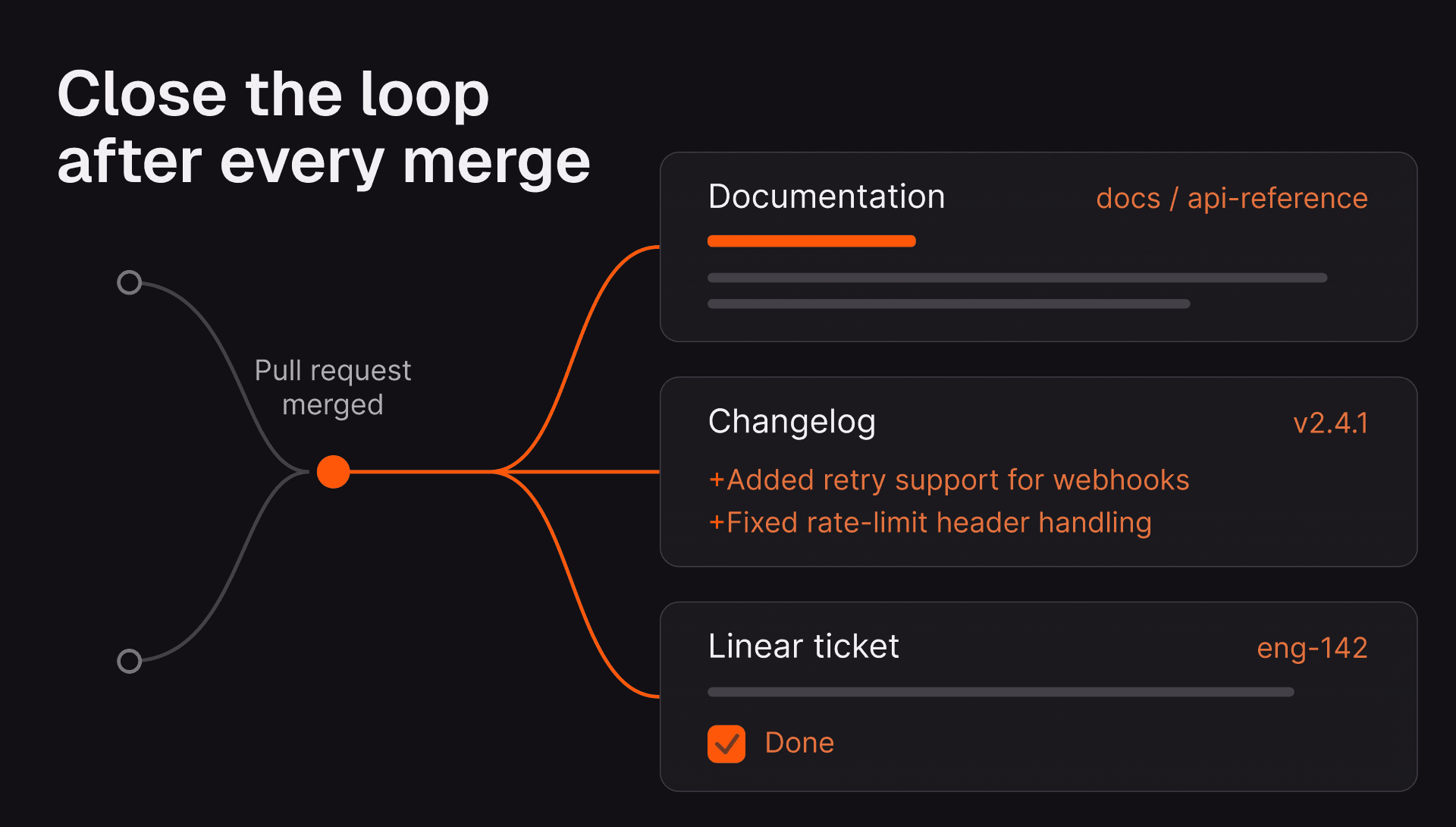
Close the loop after every merge: the agent that reviewed your PR can now follow through
Post-Merge Actions use pull request context to handle changelogs, documentation, tickets, and other work that should happen after merge.
The hidden cost of your security stack
Security tool sprawl creates hidden costs in alerts, context switching, backlogs, and verification work as teams ship more AI-generated code.
GPT-5.6 Sol and Terra: Coding, code review, and cost
Compare GPT-5.6 Sol and Terra for coding agents and code review. Explore CodeRabbit’s benchmark results, follow-through, review quality, and cost trade-offs.