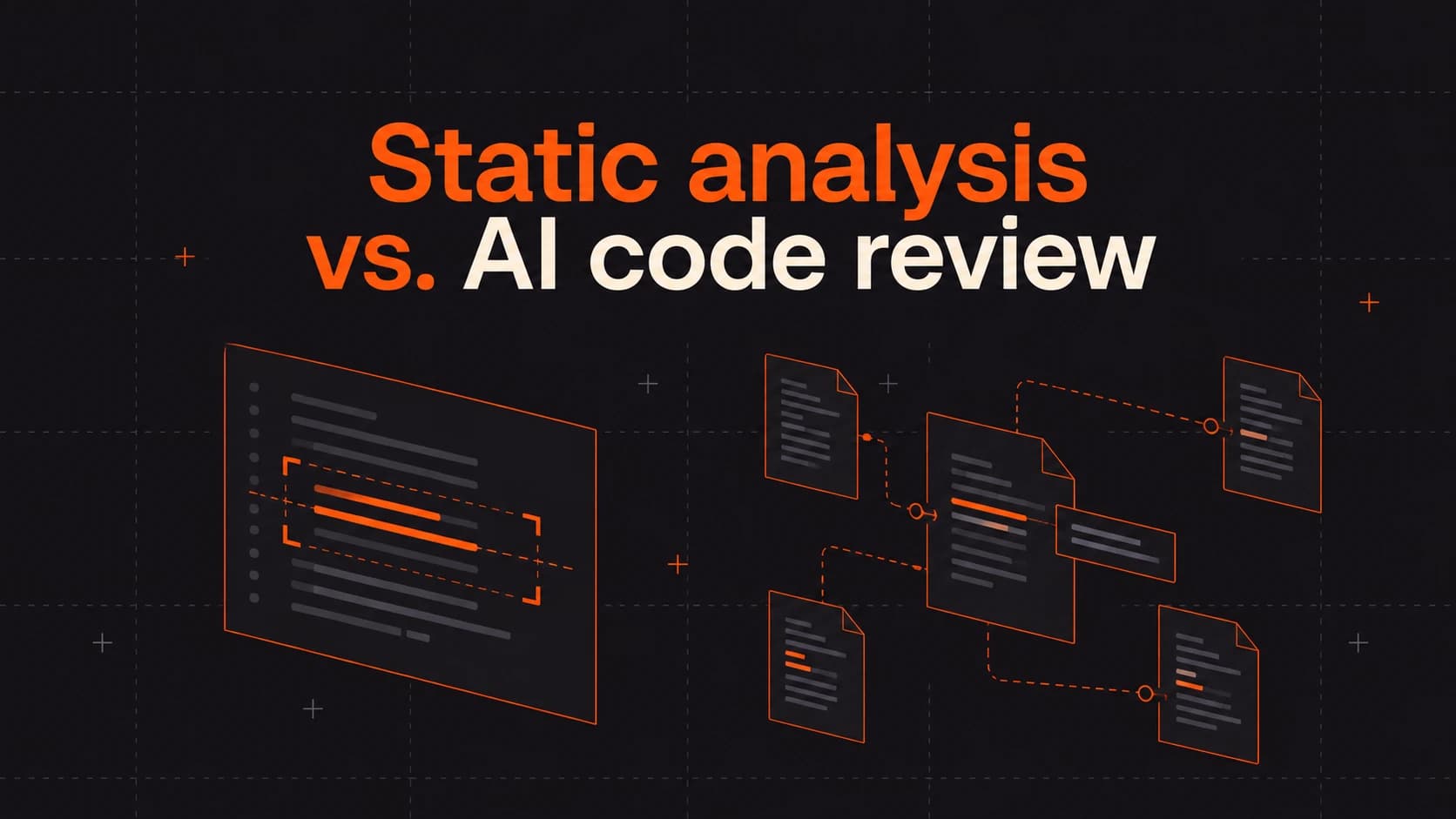
Coding agents can now produce changes faster than engineering teams can review them. An agent can write code, run tests, inspect its own work, revise the patch, and then hand the result to a human for approval. The team still owns the quality, safety, and traceability of anything that gets merged.
Google reports that 75% of its new code is AI-generated and then approved by engineers. As agents take on more of the development process, reviewers increasingly encounter a finished change after the prompt, repository context, generated tests, and agent feedback have already shaped it. Approval may be the first point at which a human evaluates the complete change and catches assumptions or requirements the agent missed.
That review becomes less independent when it inherits the same context, assumptions, and objective that shaped the change. Using a different model or vendor may reduce correlated failures, but separation alone is not enough. Independent review requires standards defined outside the generation process, a separate verification objective, inspectable evidence, and the authority to block a change.
Agentic Change Management provides the governance structure for putting those principles into practice, including how changes are approved and how their effects are tracked after merge.
The definition and scope of Agentic Change Management
Agentic Change Management governs software changes created by humans and agents. Its scope starts when a change is proposed and continues through post-merge monitoring and remediation.
For each change, it should:
- Validate proposed changes against organizational standards using evidence from the codebase and test environments.
- Prioritize changes so review order reflects their value and risk.
- Explain what a change does and how it affects the surrounding system.
- Maintain the shipped codebase by monitoring for emerging risks and returning verified findings to the change workflow.
These controls turn “the agent should produce good code” into decisions the organization can enforce and audit. A team can route a high-risk change to the right reviewer, require evidence that a migration follows policy, block a forbidden dependency, and preserve the reason for an exception.
AI agent governance controls what an agent can access and do. Agentic Change Management governs the resulting software change.
How traditional change management applies to agent-produced code
Traditional IT change management created a way to manage production risk. RFC processes recorded proposed changes, and change advisory boards or approval gates gave the green light before anything went live. DevOps later built many of these controls into pull requests, protected branches, CI, and deployment pipelines.
These processes were designed with the idea that a person made the change. That person could explain their choices, answer review questions, and take responsibility for following the process. The records showed who suggested the change, what reviewers looked at, who approved it, and what was released.
Agent-produced changes require a different accountability model. An agent can write code and check its own work, but it cannot be responsible for the outcome. Instead, the team that deployed the agent takes on that responsibility.
The approval record must therefore capture more than the identity of the agent that opened the pull request. It must show which policies applied to the change, whether an independent system checked it, and what evidence supported the merge. RFCs and approval gates are still needed, but now they must work for changes made without a human author who can explain every decision.
Anthropic’s 2026 Agentic Coding Trends Report argues that organizations need to scale human oversight without creating bottlenecks to maintain quality as they move faster. We can already scale how much code gets generated. The question is whether our accountability systems can keep up.
Why coding agents need independent review
A student can review their answers before turning in an exam. This review might catch a math mistake or a skipped step. The final grade comes from someone else using a marking scheme set outside the student's own work.
A coding agent that reviews its own work faces the same basic limitation. Its code generation and review steps often use the same prompt, repository context, model behavior, and assumptions from the start. If the prompt leaves out a requirement, the review may still see the patch as correct because it never considered the missing requirement.
A recent preprint, The Specification as Quality Gate, describes AI review without an external specification as “structurally circular.” Its experiments use a small, planted-bug corpus and offer directional rather than conclusive evidence, but the core design problem is important: a reviewer cannot reliably check intent when it has only the generated implementation as its reference.
A team may assign the review to a different AI system from the one that generated the patch. This can reduce shared model behavior, but both systems may still work from the same incomplete task. Independent verification needs references defined outside the generation process, such as acceptance criteria, architectural rules, security policies, or migration requirements.
The verification system should check the proposed change against these standards within the repository. Each result should include evidence and remain available to the human reviewer. The system must also be able to block a merge when the change fails a required condition. Otherwise, its findings are advice that the generation process can ignore.
Bundled reviewers are still helpful before submission. They can spot clear mistakes before a pull request reaches the team. Final approval, however, needs independent review against standards the authoring process did not invent for itself.
How CodeRabbit implements Agentic Change Management
CodeRabbit’s Agentic Change Management platform brings four capabilities together across the life of a software change, from validation and prioritization to explanation and post-merge maintenance.
- Validate: AI Code Review evaluates work before commit and during pull-request review. Repository-level Code Guidelines and path-specific instructions keep review standards consistent across coding agents. Pre-Merge Checks turn built-in and team-defined requirements into warnings or blocking conditions, while authorized exceptions remain in the review record with supporting evidence.
- Prioritize: CodeRabbit Triage scores and routes proposed changes using business value and risk. Readiness and reviewer fit provide additional routing context. Consequential work can reach human reviewers first, while duplicate or unready changes can be filtered from the queue.
- Explain: Change Stack groups related edits, orders them by dependency, and anchors explanations to the affected code ranges. Reviewers can see how a change fits together and where deeper judgment is required.
- Maintain: CodeRabbit Security applies repository context after merge and monitors the shipped codebase for emerging security risks. It analyzes relationships across the system, verifies whether identified security paths are reachable, and returns proposed fixes to the pull-request workflow.
Agentic Change Management keeps accountability with the team
Engineering leaders need a record that begins when a change is proposed and remains useful after it ships. It should show why the change received attention, which standards applied, what evidence supported approval, who authorized the merge, and why any exception was allowed. Post-merge findings should remain connected to the change and the remediation that followed.
When a defect reaches production, that record helps the team determine whether the change was misprioritized, a standard was absent, the verifier lacked context, a check failed, or an authorized reviewer accepted the risk. The team can then correct the failed control.
Coding agents may differ across repositories and teams. The organization’s standards should remain consistent across them, and accountability should follow every change from proposal through production.