AI coding agents make it easier to produce large, multi-file pull requests. A developer can ask an agent to add a feature, update models, change services, write tests, and adjust UI files in one run.
The challenge is reviewing the result. Standard review interfaces were built around file-by-file diffs. They show what changed, but they often do not show how the change fits together.
For the workflow that creates these pull requests, see The engineer's guide to a coding agent workflow.
When every large pull request requires the reviewer to reconstruct the path manually, "LGTM" becomes the path of least resistance. Explainability changes the review interface so humans can understand agent-generated changes before they merge.
What observability solved for running systems
In a small system, an engineer could often check a log and find the cause of a failure. Distributed systems changed that. A single request might pass through several services before failing, and the cause might be far from the visible symptom.
Observability helped engineers follow behavior across services. Distributed tracing, metrics, and structured logs made complex systems legible.
Agent-generated pull requests create a similar problem earlier in the lifecycle. Observability helps engineers understand software that is already running. Pull request explainability helps reviewers understand proposed code before it merges.
The timing is different, but the problem is similar: the old interface does not show the work in a way people can follow.
Why flat diffs fail large agent-generated PRs
A flat diff shows files in repository order. That is not always the order a reviewer needs.
A reviewer may need to inspect a schema change first, then the service logic that depends on it, then the API handler, then the UI caller, then the tests. In a normal diff, those files may be far apart.
The reviewer has to reconstruct:
- what changed
- why it changed
- which changes depend on others
- which files are foundational
- which files are callers
- whether the change drifted from the task
That reconstruction is cognitive work. The larger the pull request, the more work the interface pushes onto the reviewer.
For how review systems use repository evidence, see Code context: The evidence behind trustworthy AI code review.
What pull request explainability means
Pull request explainability starts with a simple idea: reviewers should not have to rebuild the change story from a flat list of files.
They need three things.
What changed?
The review should group related work together. One group might cover a data model update. Another might cover service logic. Another might cover affected callers.
Before reviewing individual lines, the reviewer should see the shape of the pull request.
Why did it change?
Agent-generated diffs often include decisions the reviewer did not explicitly request: a renamed method, a helper function, a changed call path, or a new abstraction.
Those choices may be reasonable, but they still need context. Bugs often appear when code drifts from the original task.
What order should it be read in?
Some changes depend on others. A data shape should usually be reviewed before the code that consumes it. A new contract should come before its call sites.
The review path should follow dependency order, not just file order.
How CodeRabbit Review implements explainability
CodeRabbit Review is built to make large pull requests easier to inspect. It answers the same three questions: what changed, why it changed, and what order the reviewer should follow. Check the current documentation for availability and plan details before standardizing a review process around it.
For the launch story, see Introducing Change Stack: The first AI-native code review interface.
Cohorts show what changed
CodeRabbit Review groups related files and code sections into cohorts. A large pull request becomes a smaller set of reviewable groups based on the parts of the system the change touches.
This gives reviewers the overall shape before they dive into individual files.
Range summaries explain local changes
Range summaries give plain-language explanations for contiguous blocks of changed code. A method rename, helper function, or data shape update becomes easier to understand as part of the pull request rather than as an isolated diff.
Layers create a reading path
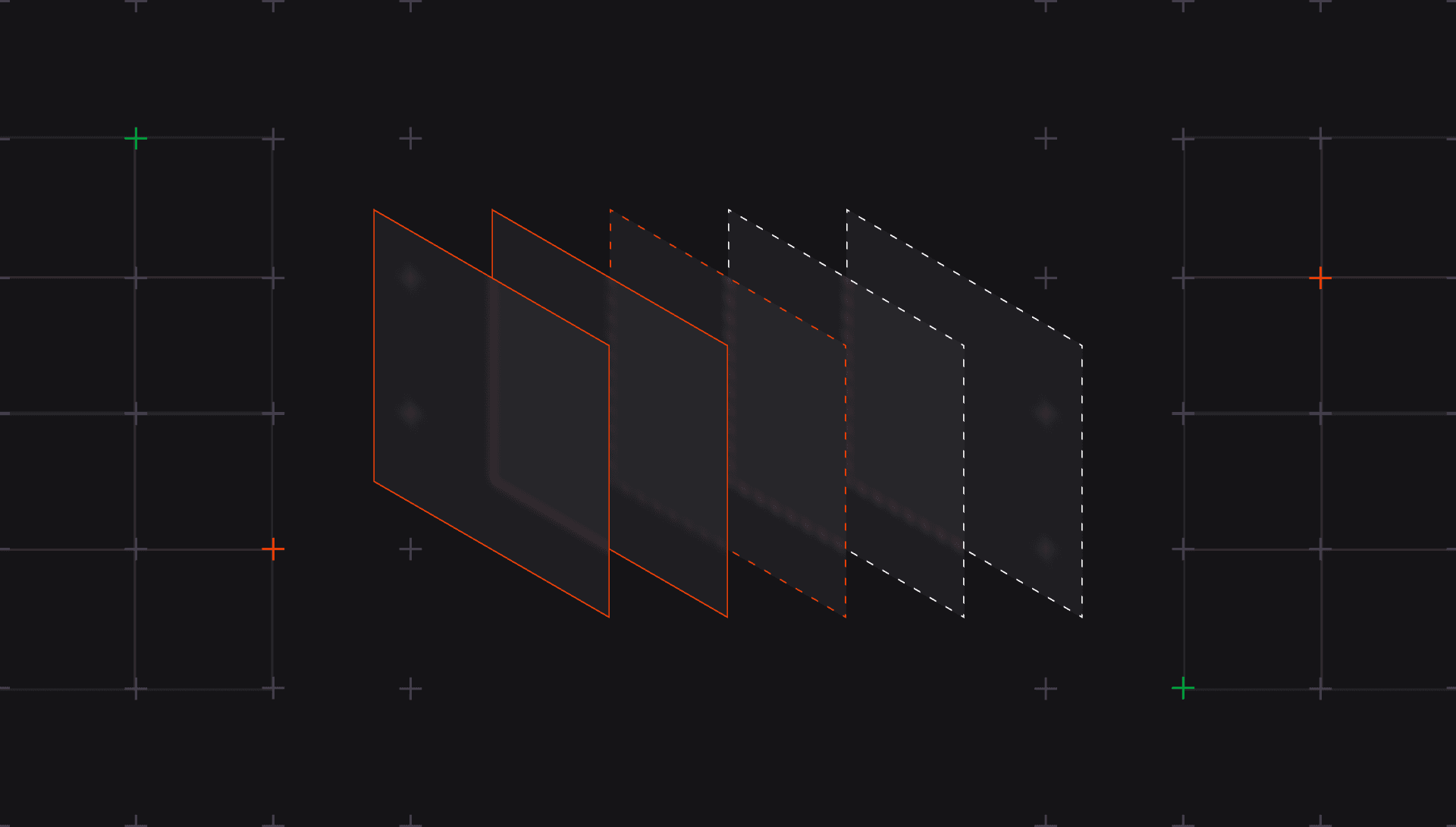
Layers organize each cohort into an order that starts with foundational changes and moves toward dependent code. The reviewer can follow the change from model to service to caller instead of jumping through repository order.
When a visual explanation helps, CodeRabbit Review can also use diagrams for parts of a change, such as call flows or data model relationships.
For a closer look at this model, see How CodeRabbit Review reads a PR the way its author would explain it.
What explainability does not do
Explainability makes a large pull request easier to understand. It does not make the merge decision.
A clear review can show how a change is organized, what depends on what, and where the important differences are. It cannot decide whether the code fits the system's long-term architecture or product direction.
Explainability is also different from standards enforcement. Teams still need tests, branch rules, ownership checks, security gates, and review policies.
For enforcement, see Building a quality gate that works for AI-generated code.
Why this matters in the agentic SDLC
In an agentic SDLC, agents can plan, implement, test, and revise changes quickly. The review interface becomes the place where human judgment catches up.
If the interface only gives reviewers a long list of files, speed turns into opacity. If the interface explains the shape, intent, and reading order of the change, reviewers can make better decisions.
Explainability is not decorative. It is the layer that makes agent-generated work legible before it becomes production code.
Once that trust is established, teams still need the interface to stay readable.
For related agent-level explainability concepts, see What is AI agent explainability?.
The interface causes the LGTM reflex
Teams cannot solve every review problem by asking reviewers to try harder. If the review interface hides the structure of a change, reviewers will either spend too much time reconstructing it or approve without fully understanding it.
For teams using coding agents, the question is simple: when an agent opens a large pull request, does your review tool explain the change, or does it give reviewers a pile of files to sort through?
If it is the second, the LGTM reflex is not just a behavior problem. It is an interface problem.