
All guides — Page 4
Build vs. buy a Slack agent: A decision framework
Once a Slack agent can merge code, the real cost is verification, not tokens. A build-vs-buy framework for engineering leaders deciding how to ship one.
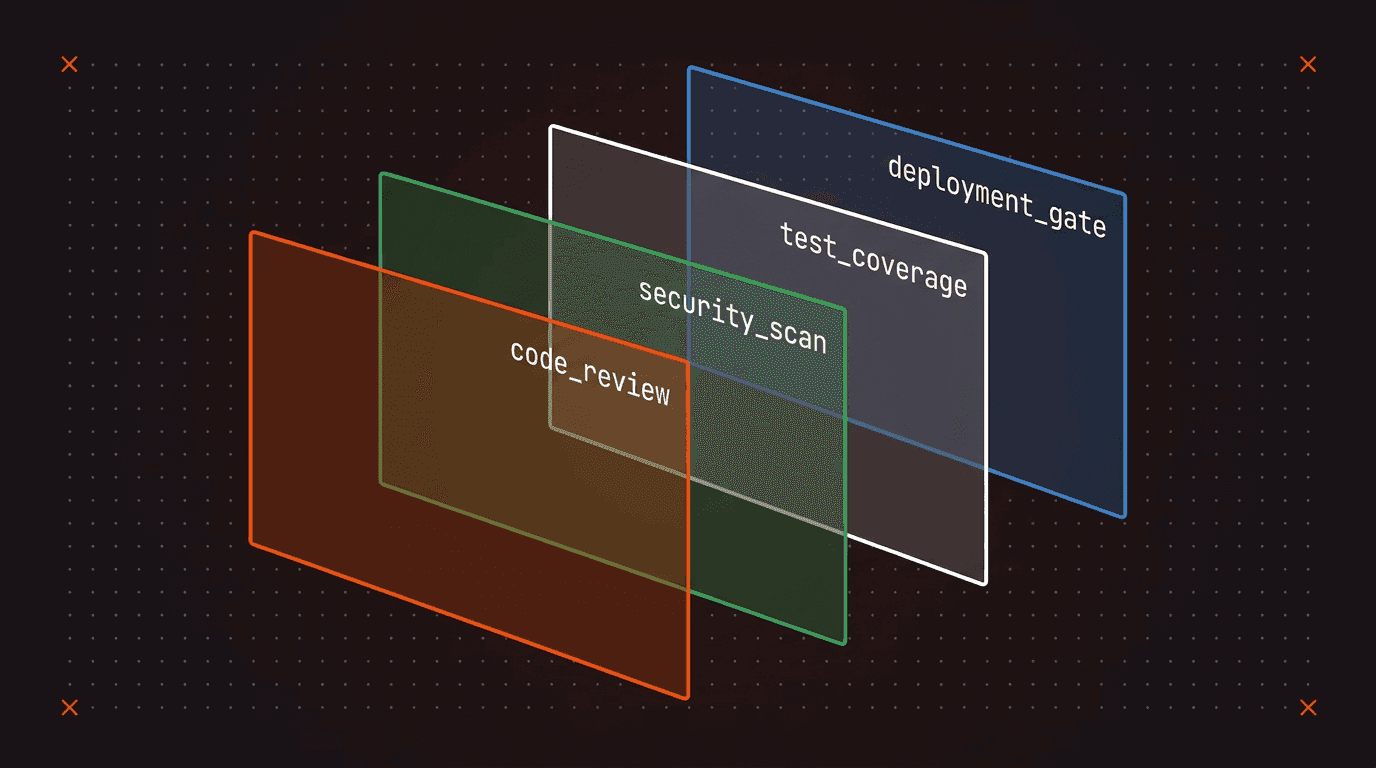
The guide to guardrails for agentic coding workflows
Learn how feed-forward and feedback guardrails catch AI agent errors, enforce standards, and keep unsafe code from reaching production.

The practical guide to agentic context engineering
Agentic context engineering decides whether your AI code review agent catches the bug or lets it ship. Here's how to get the context right.

The engineer's guide to a coding agent workflow
A coding agent workflow runs the loop from plan to merge with AI agents in it. The generation-to-verification boundary is what controls the risk.

What are Slack agentic workflows? How they work and how to use them
Slack agentic workflows let AI agents open PRs, triage incidents, and run standups where your team works. Here's how they work and where to start.
What is AI agent explainability? A 2026 SDLC primer
AI agent explainability lets engineering leaders trace every AI agent decision in the SDLC to a rule, policy, and diff. Learn what it means.
AI agent governance: A framework for engineering leaders
Set permissions, review gates, audit trails, and human approval rules for coding agents across the software development lifecycle.
What is harness engineering for AI code review without losing oversight?
Harness engineering for AI centers on four rings. The part most teams skip is verification. Here's how to close it.
What is self-healing code? And how close we actually are
Self-healing code promises autonomous bug repair, but the gap between hype and reality is real. Here's what works in production today and what doesn't.