Every code review process you’ve ever used was a rationing system. Reviewer attention was the scarce resource, so the process queued changes, assigned them to people, and trusted those people to spend their reading time well. The design worked because the other side was also scarce: code arrived no faster than humans could type it.
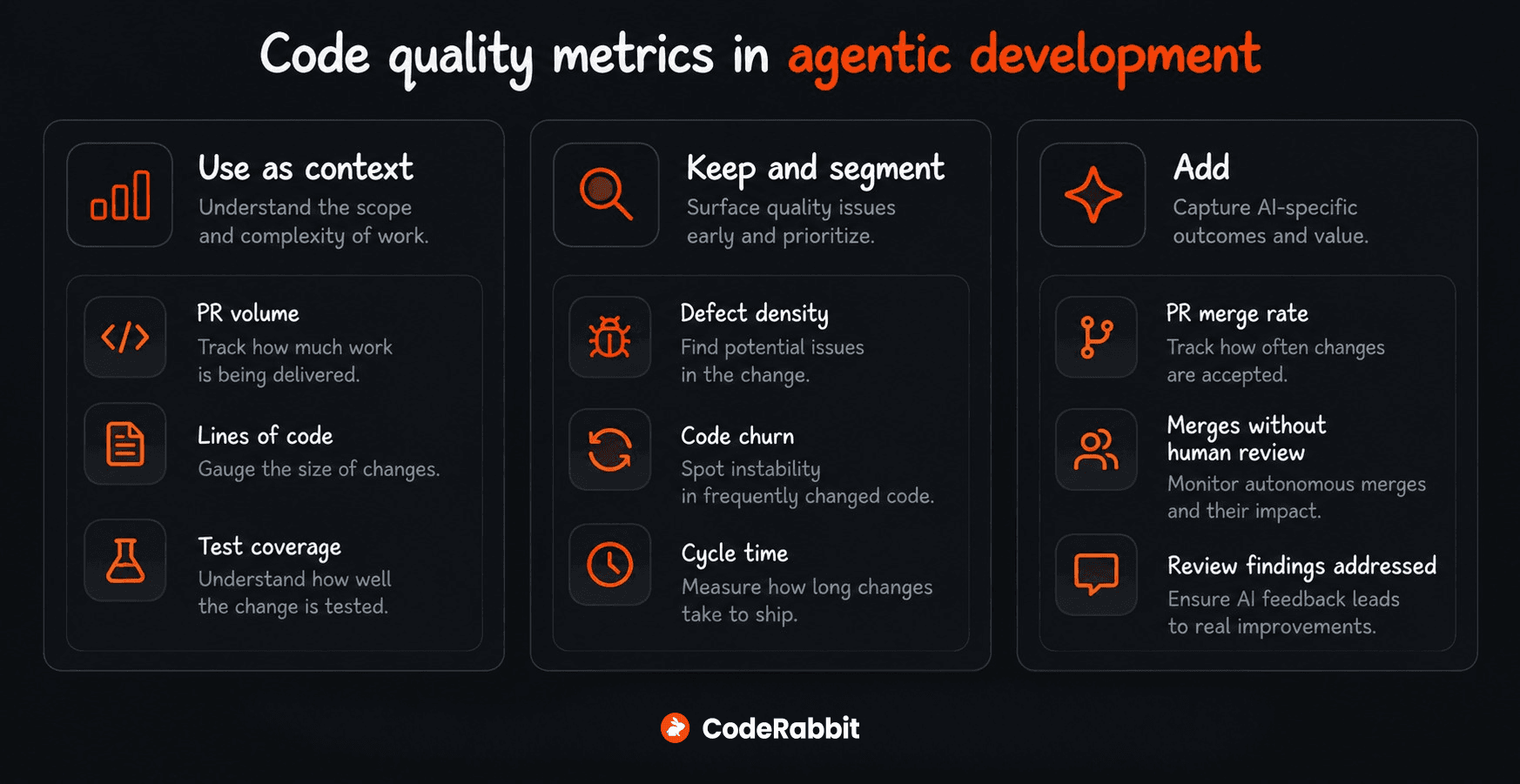
Agentic development removed the second scarcity and kept the first. In CodeRabbit’s study of 470 open-source pull requests, the AI-co-authored group had roughly 1.7× as many issues per PR as the human-only group. Authorship was inferred from signals, so the result describes that sample rather than every AI-written change. Teams adopting agents see PR volume climb while the attention available to review it stays flat. And rationing systems under that load fail quietly, by approving things: the queue keeps moving, the LGTMs keep waving code through, and the share of merged code anyone actually understood declines without an alarm going off.
A process that scales needs a different design goal. Every change arrives with an explanation and evidence, and human attention concentrates where judgment is the open question. Here’s how to build it:
Step 1: Spend machine review before human review
Run automated checks before asking a person to review. The process starts inside the coding loop, where an agent critiques output before a PR exists and many obvious issues can be addressed before human review.
What this buys you: a queue that stops carrying work that never needed human eyes. What it doesn’t buy you: a merge gate, since an inner loop can repeat the author’s assumptions and the gate needs a separate check of those assumptions.
Step 2: Put an independent reviewer at the gate, unconditionally
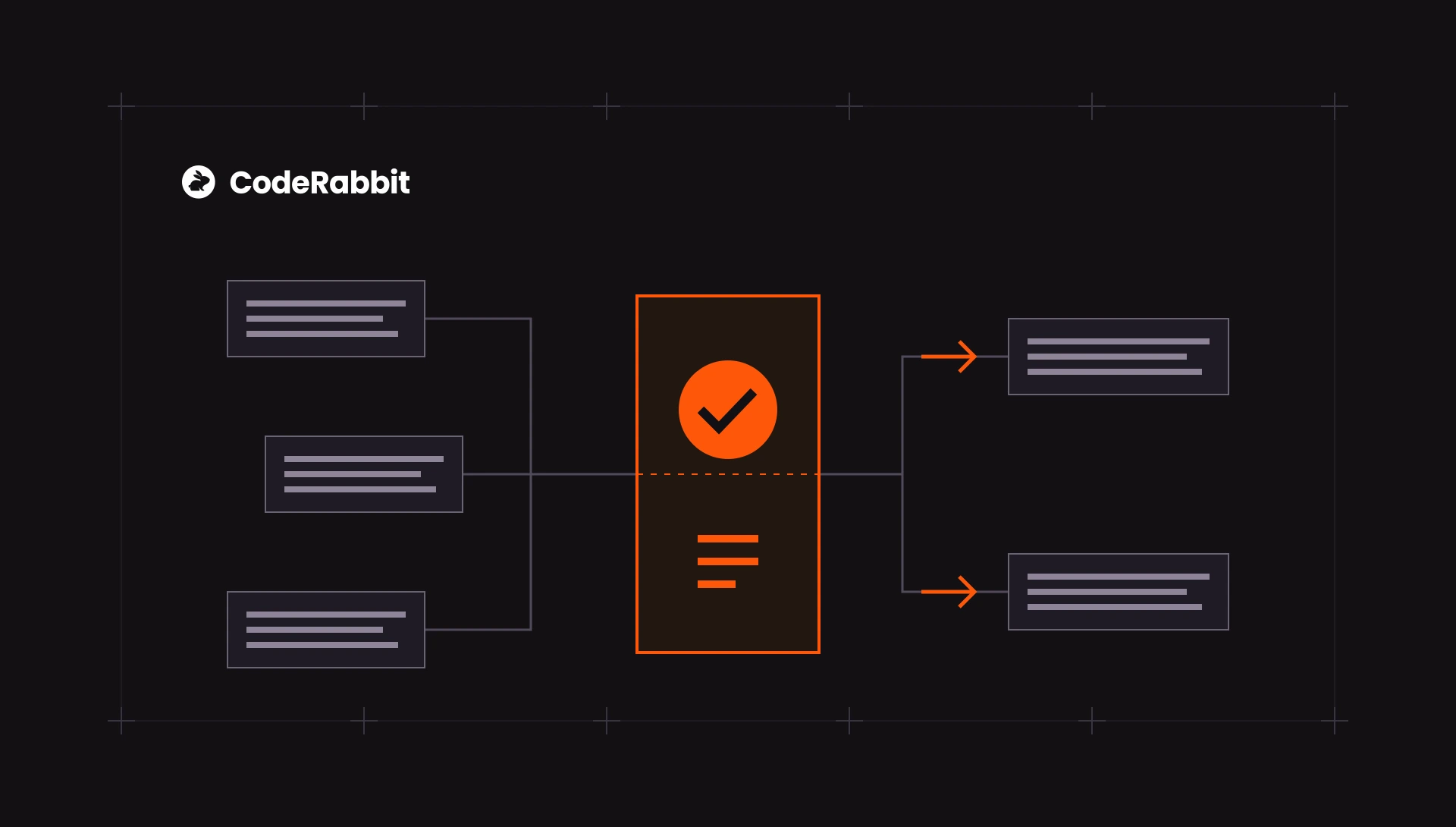
Every PR gets a first line of review from a system that didn’t write the code, using relevant repository context, your standards, and your definition of done. Automatic and unconditional are the operative words, because it’s not practical to rely on every author to invoke the right review agent, configure it correctly, and prove the review happened.
Make the findings carry evidence, too. A finding with a code path, failing check, or reproducible example gives the author something concrete to investigate. Evidence can reduce debate, but the team still needs to validate findings and fixes.
Step 3: Make every change arrive explained
The old process assumed reviewers would build understanding by reading, and rising volume makes that harder to sustain. So understanding has to arrive with the change: a generated account of its intent, its behavior, and what it touches across the codebase, organized around the change’s dependencies and behavior.
Use the explanation to orient the review, then verify it against the code and tests. Understanding is the resource actually in short supply, and a change that can’t be explained shouldn’t clear the gate any more than one that fails CI. Reviewers then spend their line-reading budget on the fraction of the diff where real decisions live.
Step 4: Route attention by consequence
First-come-first-served was a fine rule when the queue held eight PRs from eight colleagues. When agents open dozens a day, timestamp order carries no information, and the change that mattered waits behind twelve that didn’t.
Score incoming changes by risk, value, and readiness. Consequential ones go to humans with the right context, and low-risk ones follow explicitly approved automated paths with required checks. Triage helps teams decide which changes deserve attention first, but teams tend to adopt it last because the queue looks manageable until it no longer is.
Step 5: Make every correction permanent
Under the rationing system, lessons from code reviews often stayed in reviewers’ heads. Each new reviewer had to learn them, and that experience could be lost when reviewers left. A scaled process centralizes the standards and turns resolved findings into assets:
- Guidelines that hold across repositories.
- Path-based instructions for rules that apply to part of the codebase.
- Relevant learnings from past reviews, available to future reviews within their configured scope.
- Pre-merge checks encoding what your incident history taught you.
These assets make review knowledge reusable. Review volume alone does not guarantee improvement: teams need to validate lessons, remove stale rules, and measure whether recurring issues decline. The same principle runs past the merge, where scheduled or on-demand codebase audits can investigate risks that were not apparent in an individual change.
What survives of the old process
The judgment does. Humans in this design do the one thing abundance didn’t cheapen: deciding whether work is valuable, whether risk is acceptable, and whether a change belongs in a system they’re accountable for. That was always the actual job, and the rationing system buried it under reading.
A couple of habits still help on the human side, like keeping the PRs you control small and setting etiquette for agent-generated ones before reviewers start resenting every PR titled “fix stuff.”
The process, running on CodeRabbit
CodeRabbit provides tools for the five steps; teams configure their review policy and retain responsibility for merge decisions:
- Machine review first: CodeRabbit supports review in the coding loop, CLI, and pull requests. Configure automatic PR review and required checks for your workflow; a completed review does not establish that every machine-detectable issue was found.
- Explanations: Change Stack groups a pull request into related changes and ordered layers, with summaries anchored to the diff and diagrams where useful. Reviewers can inspect the snapshot and verify the explanation against the code.
- Attention routed by consequence: Triage helps prioritize and route changes using risk, value, readiness, and other signals. Teams decide which paths need human approval.
- Reusable corrections: Learnings, guidelines, path-based instructions, and pre-merge checks bring relevant standards into configured reviews. CodeRabbit Security adds repository-wide Deep Scans, separately metered from PR review, to investigate the shipped codebase. Post-Merge Actions handle configured follow-through after merge; they are distinct from continuous security monitoring.
Start a free trial to evaluate the workflow on your team’s pull requests.
Frequently asked questions
What makes a review process scale with agentic development?
Automate initial checks and explanations, then route review effort by risk and readiness. Measure queue time, recurring defects, and reviewer workload to see whether the process is keeping up; automation does not guarantee that staffing can stay fixed.
What’s the first thing to change in an existing process?
Automatic, independent review on every PR, before touching anything else. It’s the step that stops human reviewers from functioning as the lint layer.
How should PRs be prioritized at agent volume?
By consequence rather than arrival: score changes on risk, value, and readiness, route consequential ones to humans with context, and let low-risk changes follow explicitly approved automated paths with required checks.
How do standards stay consistent across multiple coding agents?
Centralize them outside the coding tools, as guidelines, path-based instructions, learnings, and pre-merge checks, with clear scope and ownership. Apply the same quality policy regardless of which agent or person produced the change.
Do human reviewers still matter in this design?
Yes. Humans judge intent, acceptable risk, and whether a change belongs in the system they own. Explanations help them choose where to look, but consequential code paths and the evidence behind findings still need inspection.