Think about the most useful thing your AI agent did this week. Really pick one specific example.
Now notice something about it: there's a decent chance nobody asked for it. The best work wasn't an answer to a prompt. It was already waiting in the thread before anyone showed up.
That's not a quirk. That's the whole point, and most of the industry has the mental model pointed backwards.
The chat box ate everyone's brain
ChatGPT taught a hundred million people what AI is putting behind a text box: you type, it answers. The turn starts with you.
That interface was so successful that it became the default model, and now nearly every "AI assistant" inherits the same buried assumption: a human has to open every turn.
It's such a natural assumption that it's nearly invisible, which is exactly why it's worth saying out loud. If a person has to start every turn, then the agent's usefulness is capped by that person's attention. It can only ever help with problems someone already noticed, already framed well enough to type, and already had the time and presence of mind to ask about.
Look at what that ceiling excludes: the latency spike at 2:38 a.m, the dependency advisory that landed while the team was asleep, the incident that started before anyone was watching the right channel.
The most valuable problems an agent could touch are precisely the ones when nobody is awake or available to @mention. Bolt the agent to the prompt, and you've guaranteed it can't help with any of them.
Invert the turn
So invert it, and let the work start before the human.
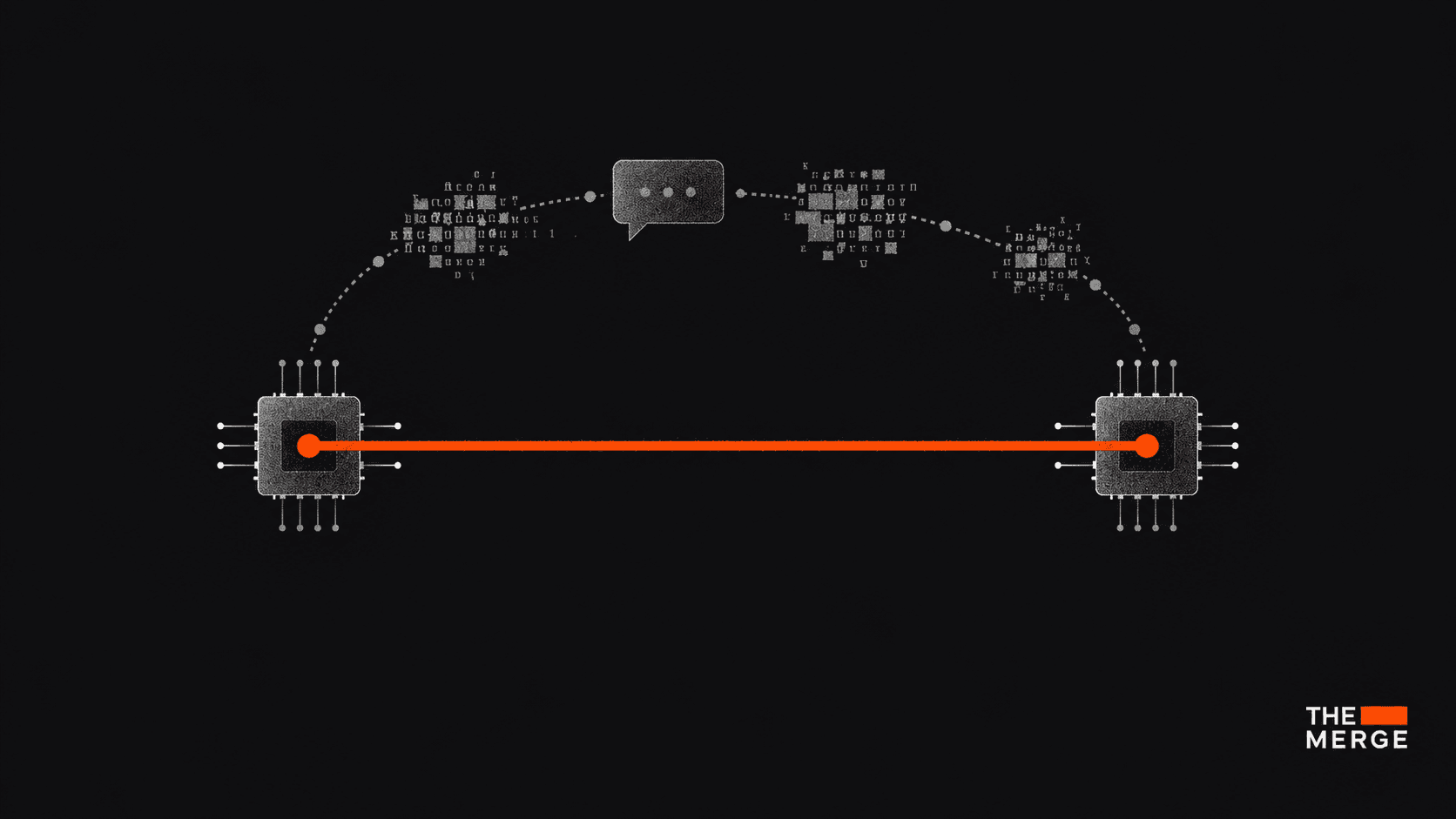
Datadog notices p99 latency climbing. A trigger fires. no message, no mention, nobody typing. The agent pulls the traces, walks the recent deployments, finds the PR that shipped a scaling config change disguised as an env var update, and posts that into the channel where the on-call engineer is about to be paged.
Then a human arrives. Their first action isn't "let me ask the agent to look into this." Their first action is reading what the agent already found and deciding what to do about it.
Same agent. Same scope. Same instructions you'd have typed. The only thing that changed is who, or what, started the turn. The mechanic underneath is almost aggressively unglamorous: a source, a rule for which events are worth a run, instructions, and a destination. That's it. That small thing is what moves the agent from "useful when addressed" to "useful when it matters," and those are not the same product.
This changes the human's job, for the better
In the prompt model, the human is the engine, and nothing happens until we take a turn. The agent is idle until addressed, and the human spends their attention starting it: noticing, framing, typing.
In the trigger model, the agent is the engine and the human is judgment. The agent handles the monitoring and the legwork. The person does the part that was always theirs: deciding whether the revert is right, whether this is a SEV-2, whether to ship it now or wait.
That's a strictly better division of labor. You want the expensive, irreplaceable thing, human judgment, spent on the decision and not on being a glorified start button. This is also the part people mean and don't quite say when they call an agent a "second brain." A second brain that only works when you address it is not a second brain. It's a reference desk. The useful version is the one that was already working on the problem before you asked.
"I don't want it running around unsupervised"
Good, you shouldn't, and it isn't.
This is where the inversion gets misread as recklessness, so be precise about what actually happens. The agent runs under the scope of the channel it lives in: only the repositories, connections, and spend that surface allows, no matter what any instruction says. It fires only on sources you explicitly allowlisted, not on ambient chatter.
It runs once as a trial on a real event before it ever goes live, so you correct the instructions before they're loose. And it posts into the thread where the team is already looking, which means the output is supervised by default. It lands in front of people, not in a log nobody reads.
Supervision didn't disappear. It moved off the front of the task, the part where a human had to notice and ask, and onto the back, where a human reviews and decides.
An agent that does its best work while you're asleep should be billed like time spent, not like a chat transcript, which is the entire reason we meter the active minute and not the token.
Take the training wheels off
Stop evaluating your agent by how well it answers prompts when you remember to ask. That benchmark rewards the chat box and quietly caps the agent at your attention span. Evaluate it by what's already in the thread when you wake up, the incident already triaged, the bad PR already found, the advisory already summarized with a recommended next step, none of it requested.
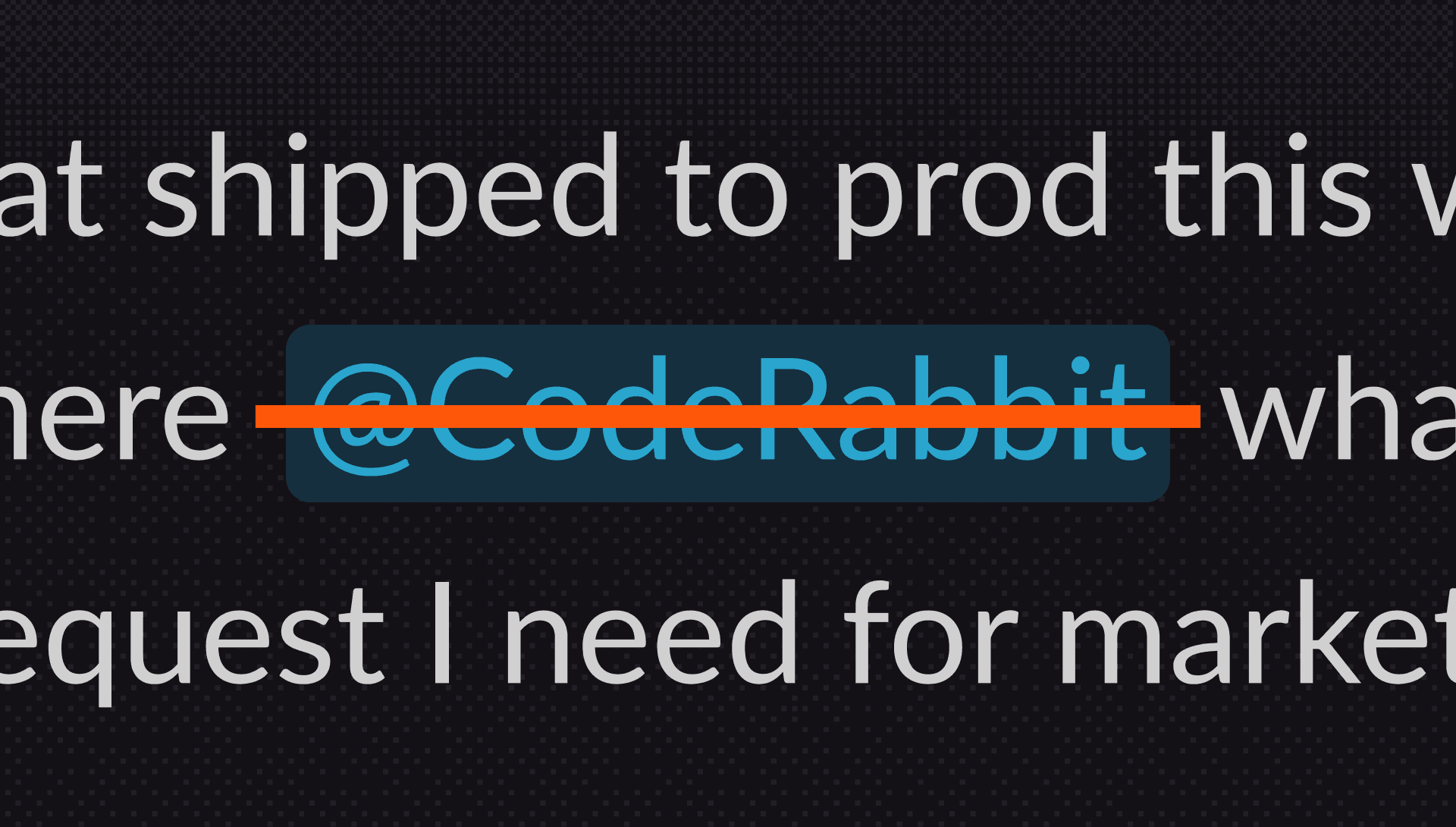
The @mention starts to feel like what it always was: training wheels. A way to get going while you and the agent don't trust each other yet. Useful, real, not the destination.
The best agent in your Slack is the one you never addressed. Build toward that one, and then take the training wheels off.
Get started with CodeRabbit Agent for Slack