Code review is the process of checking a code change before it merges. An independent reviewer examines the change for problems and helps decide whether it is ready to ship.
When coding agents produce changes faster than reviewers can assess them, review queues grow. Teams need ways to understand those changes without relying on the authoring agent to check its own work.
This guide covers what code review does, how the process developed, and how teams can adapt it to AI-assisted development.
What code review actually is
Code review is the decision about whether a change is safe to merge, made by someone who didn't write it. Treating it as a simple bug-proofing ritual sets an impossible bar, since no reviewer catches every single defect.
Independent code review brings another perspective to the assumptions behind a change. Authors can check their own work, but a separate reviewer may notice risks they missed.
A brief history of code review
Michael Fagan developed formal inspection at IBM in 1972 and published the method in 1976. It used defined roles and a structured process to make review repeatable. The Software Engineering Institute's history of inspection distinguishes that early work from its later adoption.
Over time, developers reviewed changes through printed diffs, hallway walkthroughs, and patches mailed to discussion lists. Contributors revised and re-sent patches in response to feedback.
GitHub launched pull requests in 2008. The launch changed how code review looked without changing its core purpose, turning review into a lasting, discussion-threaded record connected straight to a codebase. CI/CD pipelines and static analysis tools then added automated guardrails to catch routine flaws before a human reviewed the changes. AI-assisted review is the latest step in this workflow, as organizations use AI to analyze changes alongside context to flag the critical areas that need an engineer's immediate attention.
Why code review is under more pressure than it used to be
Large pull requests can exceed what a reviewer can assess carefully in one sitting. As coding agents generate more changes, teams need an independent check of whether each change is needed and safe to merge. The mix of human and automated review depends on risk and team policy.
CodeRabbit's 2025 research compared 470 open-source pull requests. In that sample, AI-co-authored PRs had approximately 1.7 times as many issues as human-only PRs. Authorship was inferred from available signals, so the finding should not be treated as a universal defect rate.
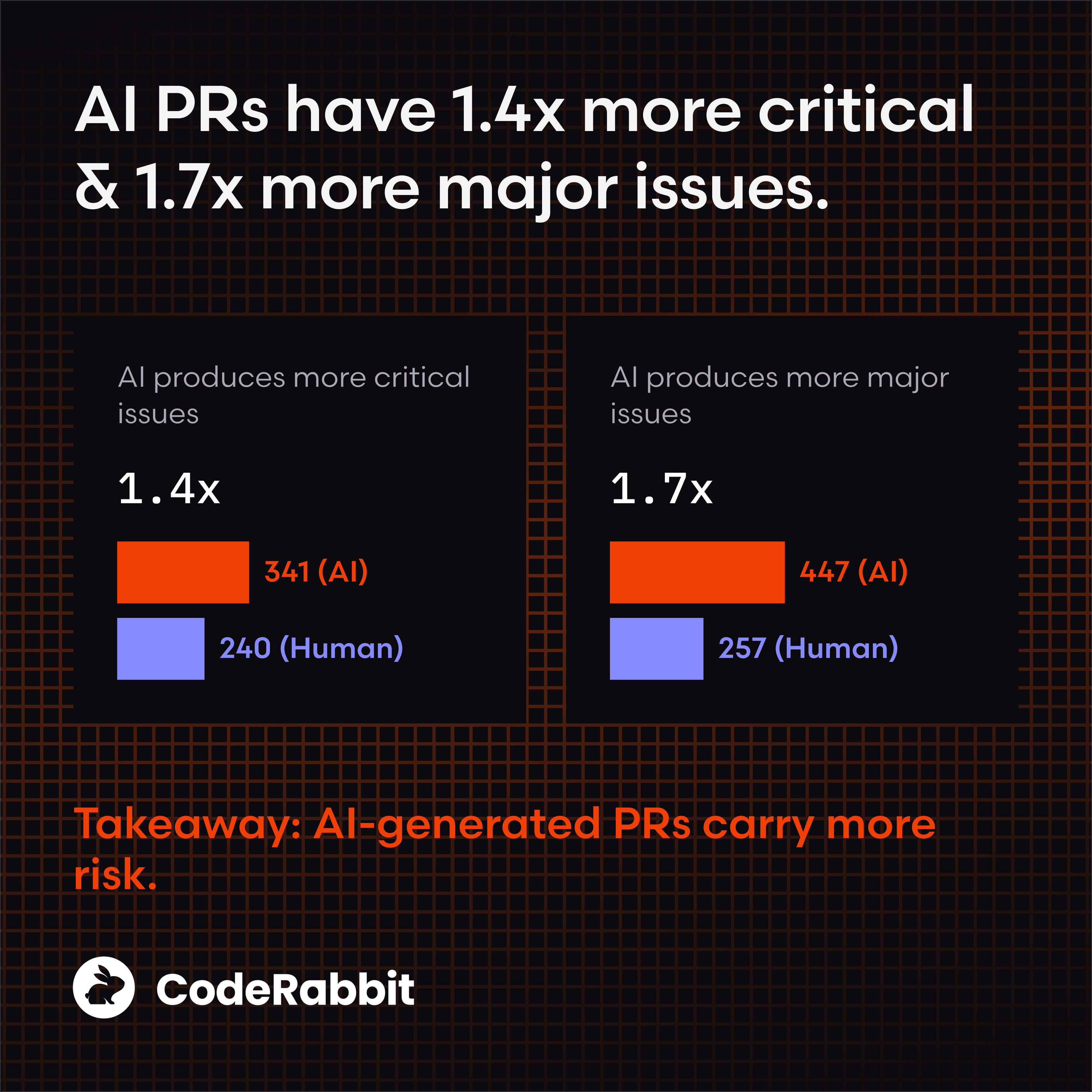
The report also found higher rates of critical and major issues in the AI-co-authored sample.
Review queues grow when incoming work exceeds reviewer capacity. More changes or more findings per change can increase the workload even if reviewers maintain the same pace.
What's changing now with code review
Teams are changing several parts of the review process as they adopt AI tools. Our guide to agentic code review explains how to bring these tools into an existing pull request workflow.
- Review is becoming behavior-based. A diff shows which characters changed, while the question that matters is what the system now does differently and what breaks under a given input. Understanding has become the bottleneck now that generating code is cheap, so the scarce resource is a clear account of what a change does.
- Explainability helps reviewers assess a change. A description such as "Refactored auth" tells reviewers little about the effects. A walkthrough can explain intent, affected behavior, and risk before reviewers inspect individual files. The code explainability guide walks through how to assess intent, blast radius, and evidence.
- Checks are spreading across the whole SDLC. Planning, pre-merge checks, and post-merge monitoring are all now places where a change gets evaluated, because catching a problem before code exists beats catching it after. When producing code is faster than understanding and validating it, better models don't solve a judgment bottleneck.
- Review needs a reviewer who isn't the author. When an agent writes code and reviews its own output, that's a closed loop with no outside check, which is exactly the DIY setup a lot of teams reach for first. Review needs independence precisely because the more code an agent writes, the less a same-agent self-check is worth.
What good code review looks like today
Strip away the tooling debate and good review still comes down to these properties, whether the reviewer is a person, an agent, or both.
- Independent. The reviewer isn't the author, and isn't operating on the same assumptions the author had while writing the code.
- Explainable. A finding without a reason attached is an opinion with extra steps. A good review says what changed, why it matters, and what happens if it's ignored.
- Fast enough. A review that takes three days to start is a review that gets skipped under deadline pressure. Speed keeps the checkpoint from getting routed around.
- Additive. The best reviews expand what one person could catch alone, building on human judgment rather than substituting for it.
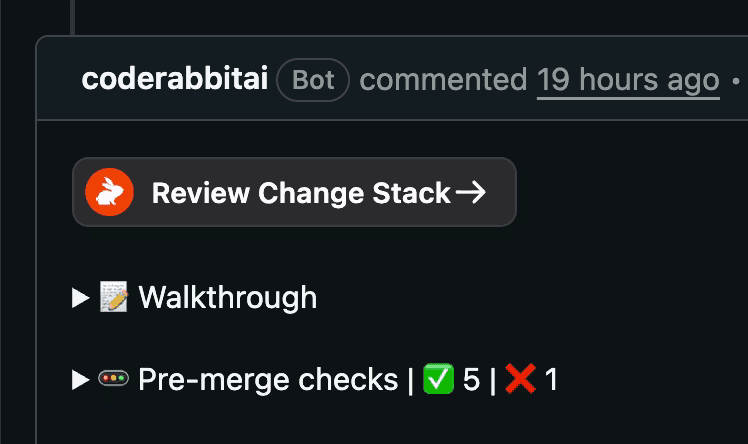
Change Stack ties explanations to specific code ranges so reviewers can inspect the code behind each summary.
A practical first step toward all four is to shrink the review surface. Smaller, more frequent PRs are still easier to reason about than sprawling ones, agent-written or not. And if your team is experimenting with agent-generated pull requests, the etiquette in vibe coding at work is worth reading before reviewers start resenting every PR titled "fix stuff."
Code review is part of a larger process
Code review helps a team decide whether a change is ready to merge. Other checks answer different questions. Before implementation, the team can check whether the proposed approach meets the requirements. After deployment, monitoring can reveal failures that tests and review missed.
For example, a change to a login flow needs a clear plan for how sessions should expire. Code review checks whether the implementation follows that plan. Tests exercise expired sessions, and production monitoring can reveal unexpected login failures after release.
Agentic Change Management connects these activities across the software lifecycle. Code review remains the check before merge, supported by planning, testing, and monitoring before and after it. The guide to AI code governance explains how teams set standards and verify that those checks run.
Independent code review with CodeRabbit
CodeRabbit provides an independent review layer for teams working with human-written and AI-generated code.
Change Stack groups a pull request into reviewable layers and places explanations beside the code.
- CodeRabbit reviews pull requests using available codebase context and configured review instructions, independently of the person or agent that wrote the change.
- Change Stack turns large diffs into guided walkthroughs of intent, behavior, and blast radius, so reviewers understand before they read.
- CodeRabbit offers review in pull requests, the CLI, and supported IDEs, so developers can get feedback at different stages of their work.
- Feedback can become learnings that inform later reviews within the configured scope. Learnings provide review context; they are not a guarantee that every future violation will be caught.