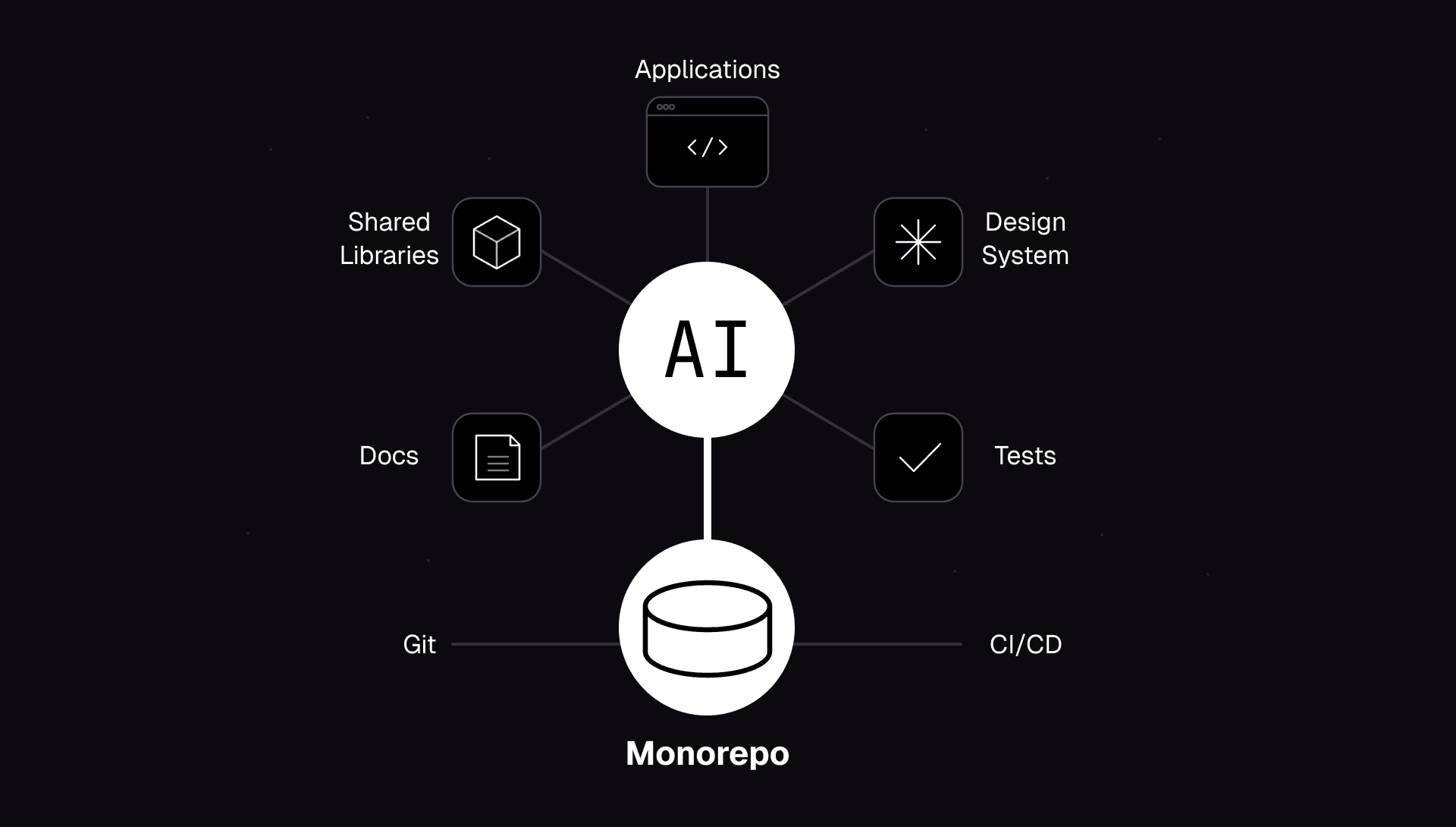
When several teams depend on the same code, a design system, a shared API, and a set of business rules, keeping those copies in sync across separate repositories is time consuming. A monorepo puts that shared code in one place, so a fix lands once and a breaking change fails at review instead of failing silently in another team's service three weeks later.
Once every team commits to the same tree, though, a bad change is everyone's problem; and code review becomes the thing standing between one careless PR and every downstream consumer of that code.
I work as a developer advocate at CodeRabbit, and before that I spent years helping organizations adopt monorepos and scale the ones they already had, including a large migration at Celonis. This piece covers when a monorepo is worth it, the tooling that makes it practical, and how CodeRabbit keeps one reviewable once you've committed to it.
Monorepo, polyrepo, monolith
In a monorepo, every project lives in one repository. They can use different technologies and may or may not share code. This is what Google, Meta, and Microsoft use, and open-source tooling has made the same setup practical for much smaller teams. It's also the model behind the migration I'll keep coming back to in this post.
A polyrepo gives each team its own repository, so instead of one repo with a hundred projects, you have a hundred repos, each owned independently.
A monolith is a different kind of thing entirely, an architecture rather than a repository layout, an application built, deployed, and tested as a single unit. You can run a monolith inside a monorepo or split one across a polyrepo, since the word describes how software is deployed, not where the code lives.
Polyrepo earns its place when teams are truly independent and can deploy without touching anyone else. The failure mode is the distributed monolith, separate repositories that still have to deploy together, which gives you the coordination cost of a monorepo with none of the benefits.
The objection that kept smaller teams away from monorepos for years was build times. A monorepo rebuilds everything a change touches, so editing one piece of shared logic can mean rebuilding the design system, the web app, and the mobile app, even if only one of them uses your change.
Build caching settled that. Free tools like Nx and Turborepo skip any project with inputs that didn't change, so a build only touches what you actually modified. You'll need somewhere to store the cache, and GitHub Actions gives you 10 GB per repository before you have to pay an S3 bucket or a remote-cache service. The build-speed problem that used to require a dedicated platform team is now a config decision.
When a monorepo is the right call
The deciding question is whether your teams actually share code. If your projects are independent and deploy on their own, polyrepo is simpler. If several teams maintain the same design system, business logic, or APIs, a monorepo is what keeps everything in sync.
The pattern usually starts innocently. A team ships something standalone, then it grows and starts sharing a design system or a microservice with other apps. On paper, everything stays independent. But the bill arrives later when you're maintaining several live versions of the same shared code, and every upgrade means building and publishing them all.
A monorepo also wins when you need atomic changes across services. When you introduce a breaking change to a microservice that every app depends on, a polyrepo scatters the fix across repositories, and rolling it back after a production break becomes a coordination problem involving every affected team. In a monorepo, the same change lands as a single commit with a single history: One revert undoes it everywhere.
The same logic applies to large refactors, which is where polyrepos stall: you sit blocked, waiting for another team to ship the change you depend on. Over time this shapes culture too, nudging teams toward reusing shared code instead of reinventing the same utility five times.
At a previous company, my team worked on one interconnected product, but under polyrepo every squad built its own frontend against a shared design system. Upgrading Angular meant chasing each team's repo one at a time, it was a miserable process.
Over a couple of years' time, we consolidated everyone onto an Nx monorepo, and the change showed up in the numbers: Releases went from occasional to more than 40 apps a week. Angular upgrades and new tooling stopped being projects and became routine, and code sharing through internal libraries finally worked the way it was supposed to.
None of this makes polyrepo wrong. It makes it the answer to a different question, and forcing unrelated projects into one repo causes its own problems.
When polyrepo is the better choice
Polyrepo has real uses, and one is worth stating up front. You can run several monorepos, so "not everything in one repo" doesn't mean "one repo per project."
Keep things apart when teams own unrelated products that share no code and ship on their own cycles, where a monorepo buys you nothing and a separate repo keeps release timing and customer-facing changelogs clean.
Compliance can make the split non-negotiable, since government contractors and customers who require that only named people touch the code are best served by a repository walled off from everything else. Open-sourcing is the other common case, where a dedicated public repo lets outside contributors in without dragging the rest of your codebase along.
Keeping a monorepo healthy with CodeRabbit
Let’s say you've made the call and moved to a monorepo. The bet comes due here. Every advantage came from putting teams in the same tree, and that same closeness means one careless PR now reaches everyone downstream. On a busy monorepo the reviewer catching it is a person working through dozens of PRs a week, and people miss things.
On top of that sits a newer pressure: a growing share of the code in pull requests wasn't written by anyone on the team. In an agentic SDLC, a coding agent produced it, and the reviewer is now evaluating code they didn't author and may not fully understand. That changes the question from "would I have written it this way" to something harder: "what does this actually do, and where does it break."
CodeRabbit's analysis of AI-authored versus human-authored PRs found that AI-generated changes carry roughly 1.7x more issues on average, and more than 3x more readability problems. In a monorepo, that code lands right next to everyone's shared logic, which makes the comprehension gap a shared problem too.
CodeRabbit takes the repetitive first pass so your reviewers can spend their attention on architecture and intent. On a monorepo, a few things make it worth having:
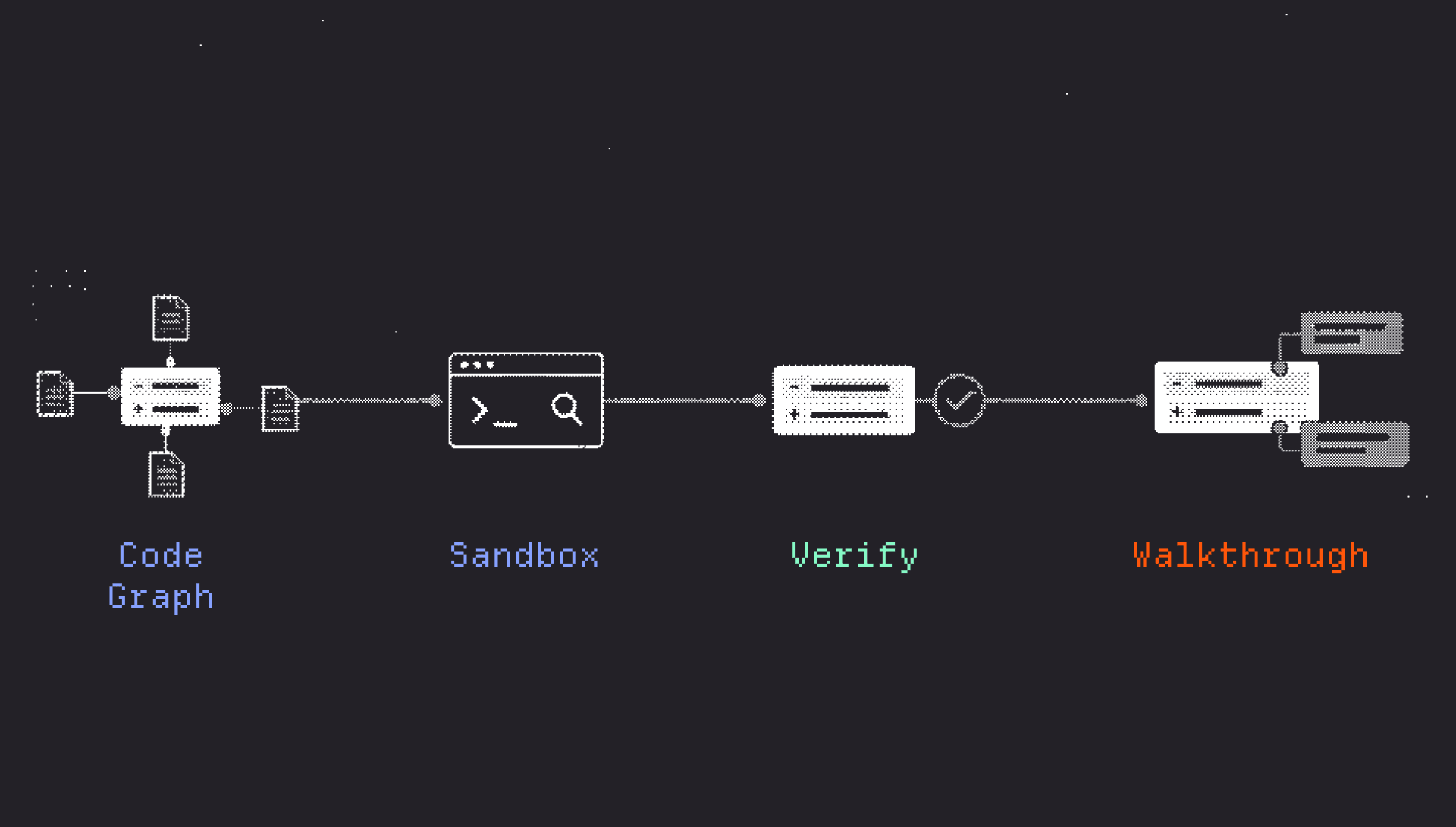
It traces changes through the code graph and flags breaking API changes against the callers they affect, before the PR merges.
It opens each review with a plain-language summary, a walkthrough, and an architecture diagram, so a reviewer facing an unfamiliar change can see what it does before judging whether it's right.
It holds style and convention consistent across packages and calls out missing docs, which is where shared code rots fastest.
It runs 50-plus linters and SAST scanners inline, and learns from your team's feedback over time rather than applying a generic checklist.
None of this replaces human review. It makes the human faster and keeps the standard, even across teams that would otherwise drift apart.
The context isn't limited to a single tree either. For polyrepos, Linked Repositories and Multi-Repo Analysis extend the same reasoning across related repositories, so a renamed field in an API schema surfaces against the services that parse it even when they live somewhere else. That's what matters for teams with microservices, shared SDKs, or a split frontend and backend.