Merged pull requests on GitHub climbed from 25 million a month in January 2023 to 90 million a month in March 2026, and GitHub ties the jump to agentic workflows. Many of the ones landing in open source queues show up without the context a maintainer needs to accept them, like whether the change follows the project's rules or duplicates a fix someone already sent.
Fatih Kadir Akın knows that queue well. He built prompts.chat, an open prompt library with more than 175,000 GitHub stars, and works as a developer advocate on Automattic's WordPress team. On The Merge, he told Hendrik Krack where the problem sits:
The code itself may be slop, or it can be really nice code. The problem is that whoever is controlling the agent isn't controlling it very well.
The missing piece is context. Neither the agent nor the person running it supplies any, so the maintainer has to rebuild it in review.
What agent-written PRs miss
The prompts.chat repo keeps a CSV copy of the prompt database, and a worker regenerates that file every day. Hand edits to the CSV vanish within a day, even after Fatih merges them. The PR template and CONTRIBUTING.md both say not to touch it, and agents keep sending PRs that edit it anyway. Fatih puts it plain and simple, “the agents don't care.”
AutoGPT hit the same wall. Better contributor guidelines and docs changed nothing, because agents don't go looking for documentation unless something points them to it.
Duplicates make it worse. Fatih suspects plenty of contributors just point an agent at the open issues and tell it to send fixes. The result is one bug fixed several times by agents that never checked for an open PR, with the maintainer reading every copy.
Put the rules where agents will read them
Maintainers are answering with rules agents can't miss and limits they can't get around:
Instructions beside the code
AutoGPT put its rules in AGENTS.md files next to the code they govern and pointed its CLAUDE.md files at them, so any agent working in that directory picks them up.
A contribution guide for agents
Jesse Vincent wrote one into the CLAUDE.md and AGENTS.md files for Superpowers, and Hendrik says PRs that ignore it get rejected automatically.
A written AI policy
Home Assistant's AI policy welcomes AI as an aid and closes any PR or issue an agent opened on its own. Project lead Franck Nijhof puts it plainly: AI makes contributions cheap to produce, and maintainers still have to verify every one.
Limits on the queue
GitHub now lets maintainers restrict PRs to collaborators or cap how many a user without write access can have open.
Fatih plans to dig into how Superpowers handles it for prompts.chat. He calls the current moment chaos, but he's betting agents get better at following a project's rules as the models improve.
The maintainer still approves the merge
Rules don't change who signs off. CodeRabbit reviews every prompts.chat PR first and does most of the hard work, and Copilot sometimes takes a second pass. Fatih still reads the code before anything merges. "The biggest problem is that you have to be an approver as a human. I'm merging it to something that works on the internet. I should be careful."
That last read is exhausting even at prompts.chat's volume, and bigger projects get far more. OpenCode was pulling in around 200 new PRs a day when Ryan Vogel came on The Merge. Daniel Stenberg, who maintains curl and has written about AI-generated reports for years, says the project can't just ignore them, because some of them find real flaws.
The volume costs goodwill too. During one rush, Fatih closed PRs without a comment, and he worries that silent closes can come off as rude.
Context is the contributor's job
Fatih's advice goes to the other side of the PR. Asked what developers should learn now, he went straight to communication. People used to ask how he got ChatGPT to do what he wanted, and his answer was that he's a communicator first, someone who gives talks across Turkey and now in the US.
At the end, you are communicating with the AI agent. You should give context, and context is about communication.
A message with no context lands badly with a colleague, and agents react the same way. When friends tell him AI couldn't build their app, he can usually get it working by explaining the problem properly. An open source contribution needs that skill twice: the agent needs the project's context to write a change that fits, and the maintainer needs the contributor's context to trust it.
Open source contributors keep landing in the same place, where a contribution counts for more once the person behind it has shown up in the community. That's how it worked for Fatih. He's largely self-taught, and GitHub was where strangers read his code and told him what was wrong with it. Some became contributors, and he still calls it "magical" that someone on the other side of the world will help you build something.
Verification is the skill to build
Fatih trusts coding models more than he used to. Early agents needed him to check every line, and now he thinks they write better code than he does, so his time goes to architecture. "I don't want to be the smartest guy in the room. I just want to build something that works."
That trust has limits. One model recently started writing Ruby in the middle of his JavaScript project and went hunting for Ruby files that didn't exist. Verification is the second skill he'd tell new developers to build, and it doesn't depend on writing the language yourself. Fatih has built iOS apps without knowing Swift, and he can still tell when Swift code is wrong.
Knowing what a memory leak is lets you point an agent at one when an app keeps crashing. Without that, all you see is the crash. Kunal Kushwaha made the same case: fundamentals are how engineers check what AI tools produce.
Fatih isn't sure where that instinct came from, and practice is the best guess. He used to read other people's code just to see how it was built, including the entire jQuery source. Anyone running an agent against someone else's project needs the same habit, because reading the change is how you find out whether it's worth a maintainer's time.
Watch the full conversation
The episode also gets into how Fatih landed the single-letter GitHub username f, and how prompts.chat grew from one README into an app that still credits its contributors on GitHub.
Watch the full episode of The Merge.
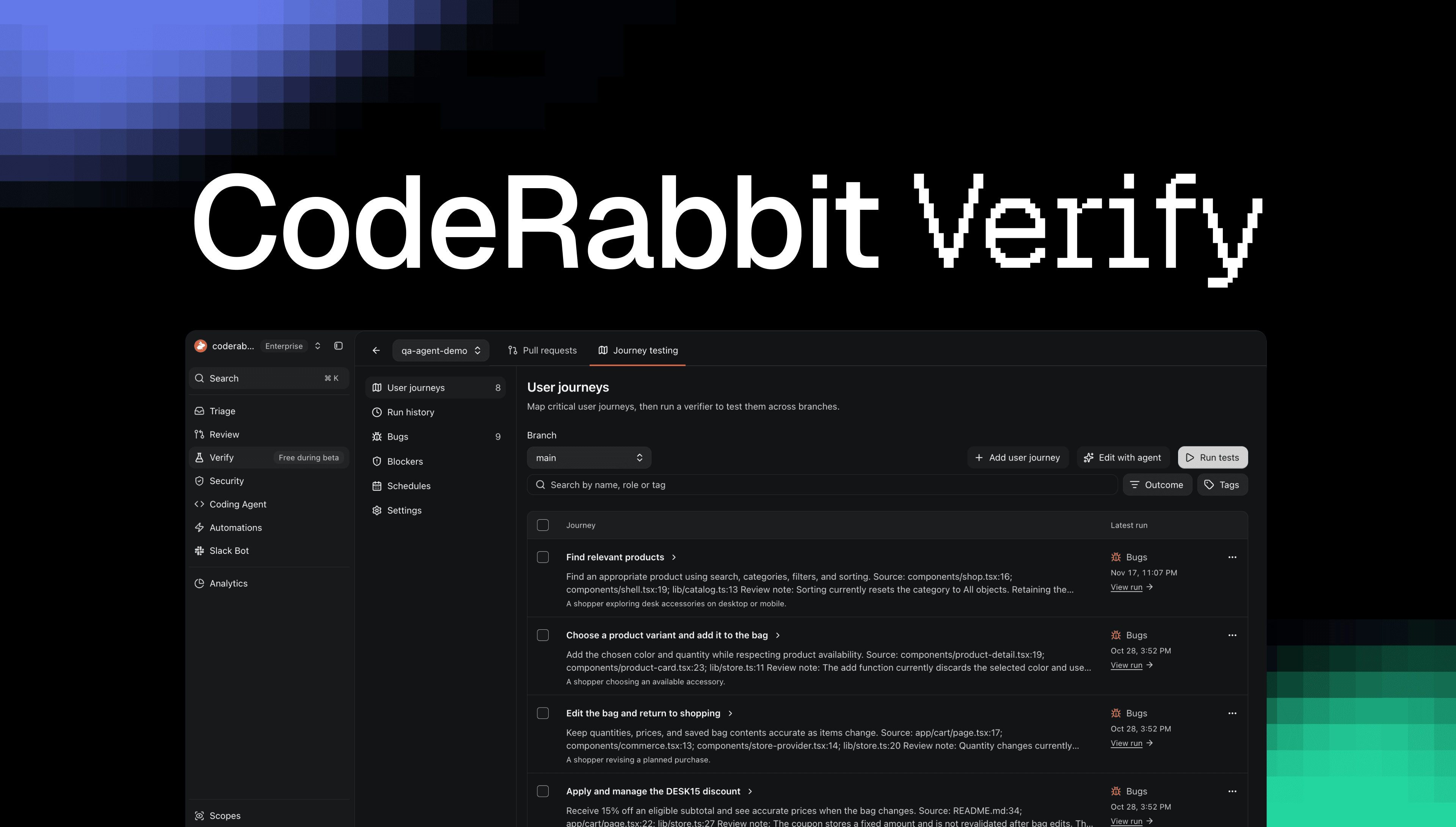
CodeRabbit takes the first pass on every prompts.chat PR, so Fatih's own read starts after the hard work is done. It's free for open source projects, and any maintainer fielding agent-written PRs can run the same setup.