Are we treating coworkers like AI agents?
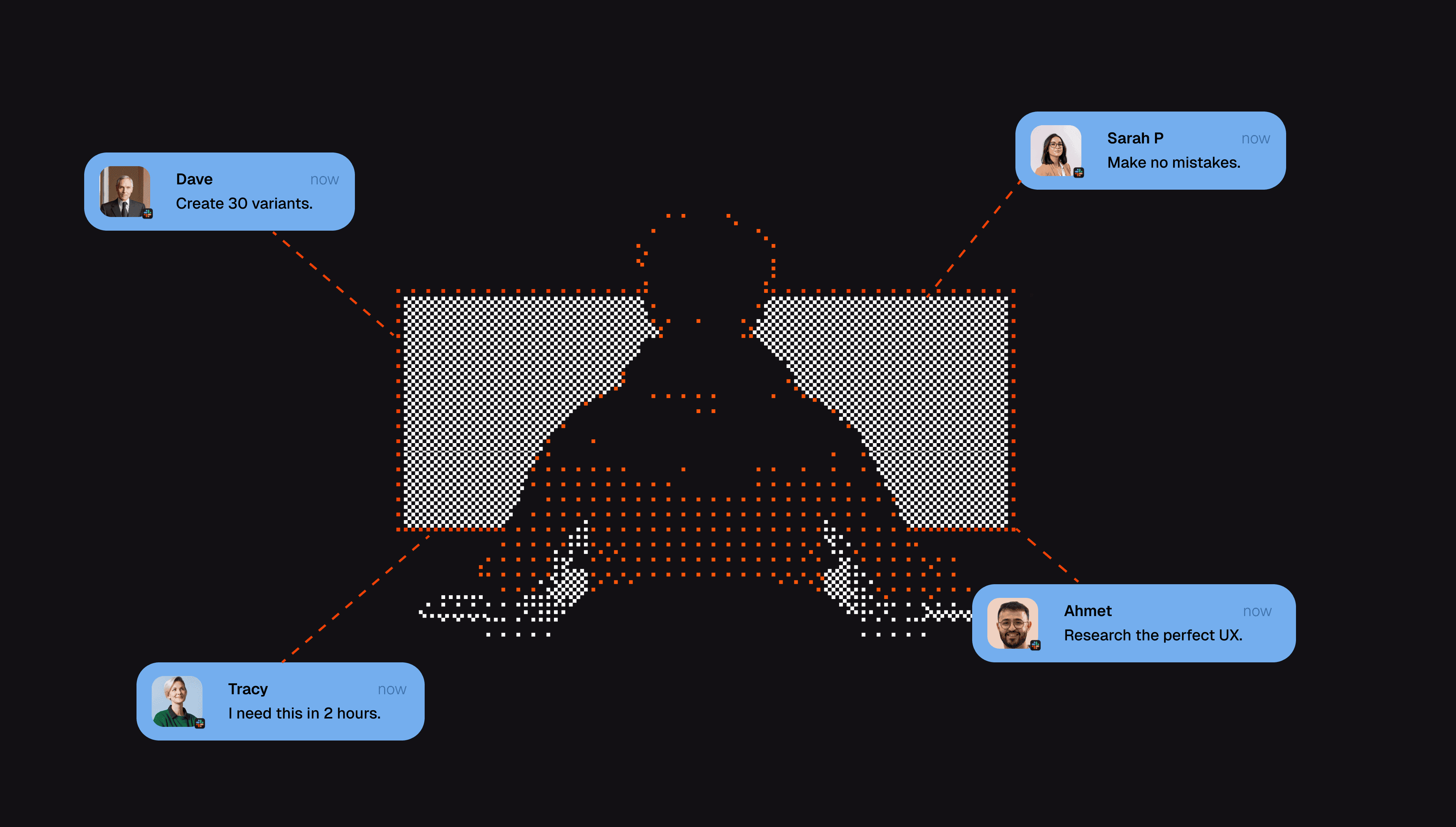
Take a look at your recent Slack messages, Google Docs comments, emails, or the transcripts of your last few video calls with colleagues. How many of them began with a greeting, or provided context for a sudden request?
Now look at your chat history with your preferred AI assistant.
One of the more curious features of the modern workplace is that these two columns of text can sometimes look surprisingly similar.
As generative AI becomes embedded in daily work, the line between how we communicate with software and how we communicate with one another can feel less distinct than it once did. Direct requests, immediate responses, and highly task-focused exchanges have become a routine part of interacting with AI systems. As organizations optimize for efficiency, it is worth considering how those habits may influence communication in the workplace as well.
The side effects of talking to machines
A common response to concerns about AI etiquette is straightforward. The system has no feelings, so how we speak to it doesn't matter.
However, behavioral scientists have long understood that habits formed in one context often spill over into others. So, does spending hours each day issuing commands to conversational AI systems change how we communicate when another human being is on the receiving end?
The evidence is still emerging. However, new research suggests that prolonged interaction with AI systems may influence interpersonal communication styles in subtle but meaningful ways.
Generative AI rewards directness. It responds instantly, stays focused on the requested task (unless there’s hallucinations) and converts instructions into results with remarkable speed. The interaction is efficient, goal-oriented, and largely free of the social rituals that characterize human conversation.
Over time, it is reasonable to wonder whether those expectations begin migrating into our human relationships as well.
Human relationships are built through repeated interactions that create trust, understanding, and shared context over time. These moments may appear inefficient when measured purely by output, yet they help build the goodwill and mutual confidence that make productive collaboration possible.
When we begin treating coworkers like conversational interfaces, like APIs, those relational investments become easier to skip.
What some emerging literature says
Because generative AI arrived so quickly, research on its social consequences is still catching up to the reality that millions of people are spending hours each day interacting with machines capable of producing human-like conversation.
Nevertheless, research is beginning to examine how those interactions may influence human relationships and workplace behavior.
The AI "social forcefield"
Researchers Christoph Riedl, Saiph Savage, and Josie Zvelebilova explored this phenomenon in their paper Cognitive Spillover in Human-AI Teams.
The researchers conducted two randomized experiments to examine whether interactions with AI influence subsequent human-to-human communication. Across both experiments, they found evidence of what they call "cognitive spillover," where the effects of AI exposure carried forward into later interactions between people. According to the authors, AI exposure influenced shared language, collective attention, shared mental models, and social cohesion.
The researchers describe this phenomenon as an "AI social forcefield." The term reflects the paper's central argument that AI shapes the social and cognitive environment in which collaboration occurs. In the researchers' framing, AI functions as part of the environment that influences how people communicate, coordinate, and develop shared understanding.
Their findings suggest that AI influences more than the quality or speed of work. It can also shape how people focus their attention, exchange information, and build common ground with one another.
The paper focuses on controlled experiments rather than long-term workplace behavior. Its findings nevertheless raise an important question for organizations rapidly adopting AI. If interactions with AI can influence subsequent human-to-human communication, what happens when those interactions become a daily part of work?
A warning flare about human relationships
If the cognitive spillover research offers evidence that AI can influence human communication, another paper raises a broader concern about where those effects might lead.
In Chatbots and Human-Human Relationships: The Need for Research on Potential Downstream Harms from Generative AI, researchers Justin Keeler and Brett Murphy issue what amounts to a warning flare. Their central argument is that society is adopting conversational AI systems far faster than researchers understand their long-term effects on human relationships.
Rather than presenting experimental findings, the paper identifies a set of potential downstream harms that the authors believe warrant further study. Among the concerns they discuss are reduced social interaction between people, spillover effects from chatbot interactions into human relationships, and the possible erosion of social abilities.
A central theme of the paper is reciprocity. The authors note that conversational systems can provide relational benefits to users without requiring reciprocal efforts in return. Human relationships operate differently. They depend on mutual obligation, compromise, empathy, and ongoing investment from both participants.
The researchers argue that this difference raises important questions about how widespread interactions with conversational AI may influence human relationships over time. The paper presents these concerns as hypotheses requiring further investigation rather than established conclusions. Its purpose is to encourage debate, not settle it.
The underlying question is difficult to ignore. How might communication habits developed through interactions with conversational AI systems influence the way people relate to one another?
The parts of work that don’t scale
Both papers point in the same direction. One provides evidence that interactions with AI can influence subsequent human communication. The other argues that society has only begun to explore the long-term consequences of those influences.
If AI changes how people relate to one another, what exactly is at stake?
The answer begins with the value of human connection itself.
Decades of workplace research have found that employees who feel supported, valued, and connected to the people around them are more engaged in their work. Organizations thrive on more than the exchange of information. Trust, cooperation, mentorship, and shared purpose shape how work gets done.
Workplaces can automate tasks. Relationships still have to be earned.
Humans don't have an API
AI systems are designed to transform prompts into responses. A prompt arrives, the system processes it, and a response follows. The interaction is immediate, task-oriented, and highly predictable.
Human collaboration operates differently. Colleagues bring experience, judgment, competing priorities, emotions, relationships, and context to every interaction. A request often becomes a conversation. Discussions lead to new ideas. Detours can reveal better solutions than the one originally imagined.
Beyond exchanging information, the strongest teams develop common ground, challenge assumptions and learn from one another. Many of their best ideas emerge from conversations that wander beyond the immediate task at hand.
AI excels at producing answers. Organizations excel when people build understanding together.
The human cost of efficiency
Efficiency is one of the great promises of AI. It gives faster responses, decisions, and execution. Organizations naturally embrace tools that help people accomplish more in less time.
But speed is only one measure of organizational health.
The same systems that reduce friction can also reduce opportunities for discussion, context-sharing, and reflection. Those activities often appear inefficient when measured against a task list, yet they help teams learn, adapt, and make better decisions.
Organizations succeed by moving information efficiently. They also succeed by creating alignment, developing people, and building shared understanding. Those outcomes rarely appear on a dashboard, but they shape the quality of decisions, the resilience of teams, and the strength of workplace culture.
As AI continues to improve the efficiency of work, organizations will increasingly determine what they value beyond efficiency itself.
Rewriting the interface
The next time you draft a Slack message or make a request of a colleague, take a moment to consider the language you're using.
Are you having a conversation, or issuing a prompt?
Before sending a context-free directive, consider adding back some of the elements that AI interactions remove. Explain why the task matters. Share the broader context. Ask a question instead of issuing a command. Take a moment to acknowledge the person on the other side.
None of these actions are efficient in the machine sense, and that is precisely the point.
We spent decades worrying about whether artificial intelligence would become too much like humans. But the more immediate risk is humans becoming a little too much like machines.